Crann Centre
Overview
The Crann Centre is a charity based in Cork, Ireland founded in 2018 by Kate Jarvey, supports individuals with neuro-physical disabilities and their families through a lifelong, innovative 2 Generation approach.
Crann's Services include psychological support, health, education, mobility, and independent living, fostering inclusion and opportunity.
My contribution
Product design User experience Service design
The team
1 × product manager 1 × product designer
Year
2025
Challenge
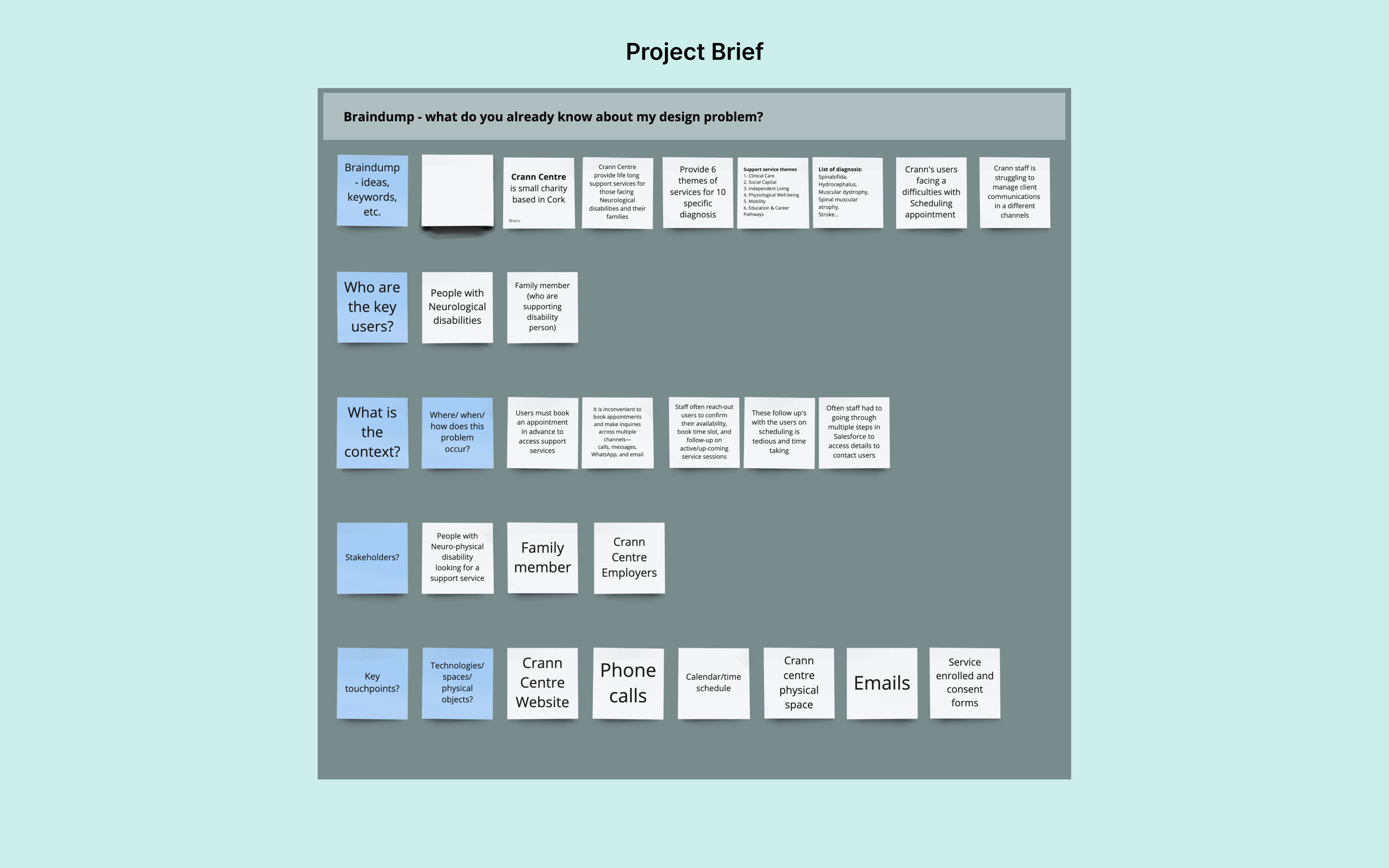
The Crann Centre struggled with fragmented scheduling and communication, leading to time-consuming follow-ups. Users needed a seamless way to book sessions and connect with support staff.
Solution
The solution address the client engagement challenges by implementing a centralised scheduling system. A mobile app with accessibility features streamlines bookings, reduces staff workload, and enhances the experience for individuals with neuro-physical disabilities.
Empathy
Secondary Research
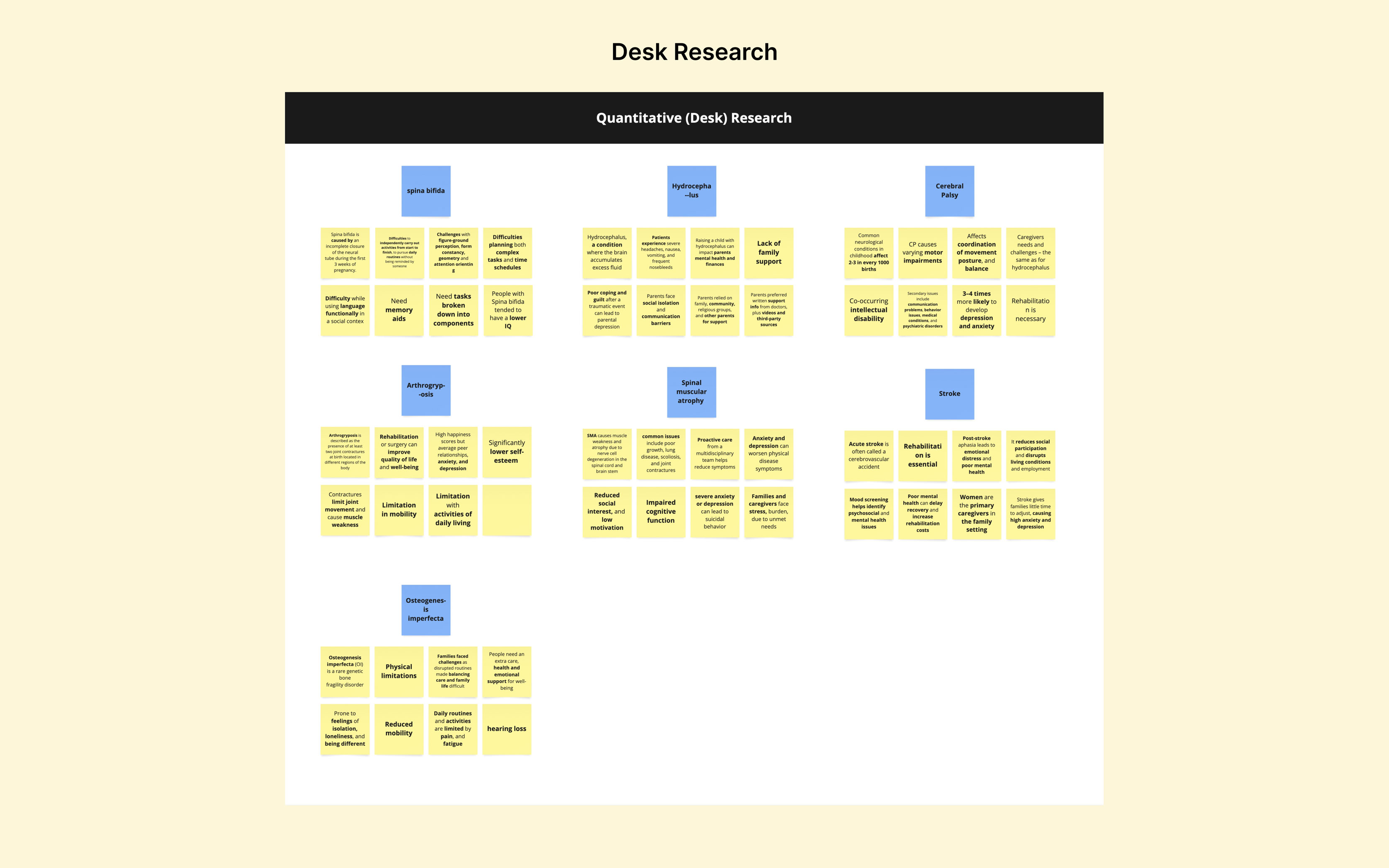
The research focused on understanding users’ disabilities, challenges, and support needs. References were gathered from research articles, journals, and books, sourced through Google Scholar, library archives, and third-party databases.
Key Research Findings
- People with Spina bifida tended to have a lower IQ
- Reduced Mobility
- Difficulties with planning complex tasks
- Families and caregivers face stress, burden, due to unmet needs
Service Blueprint
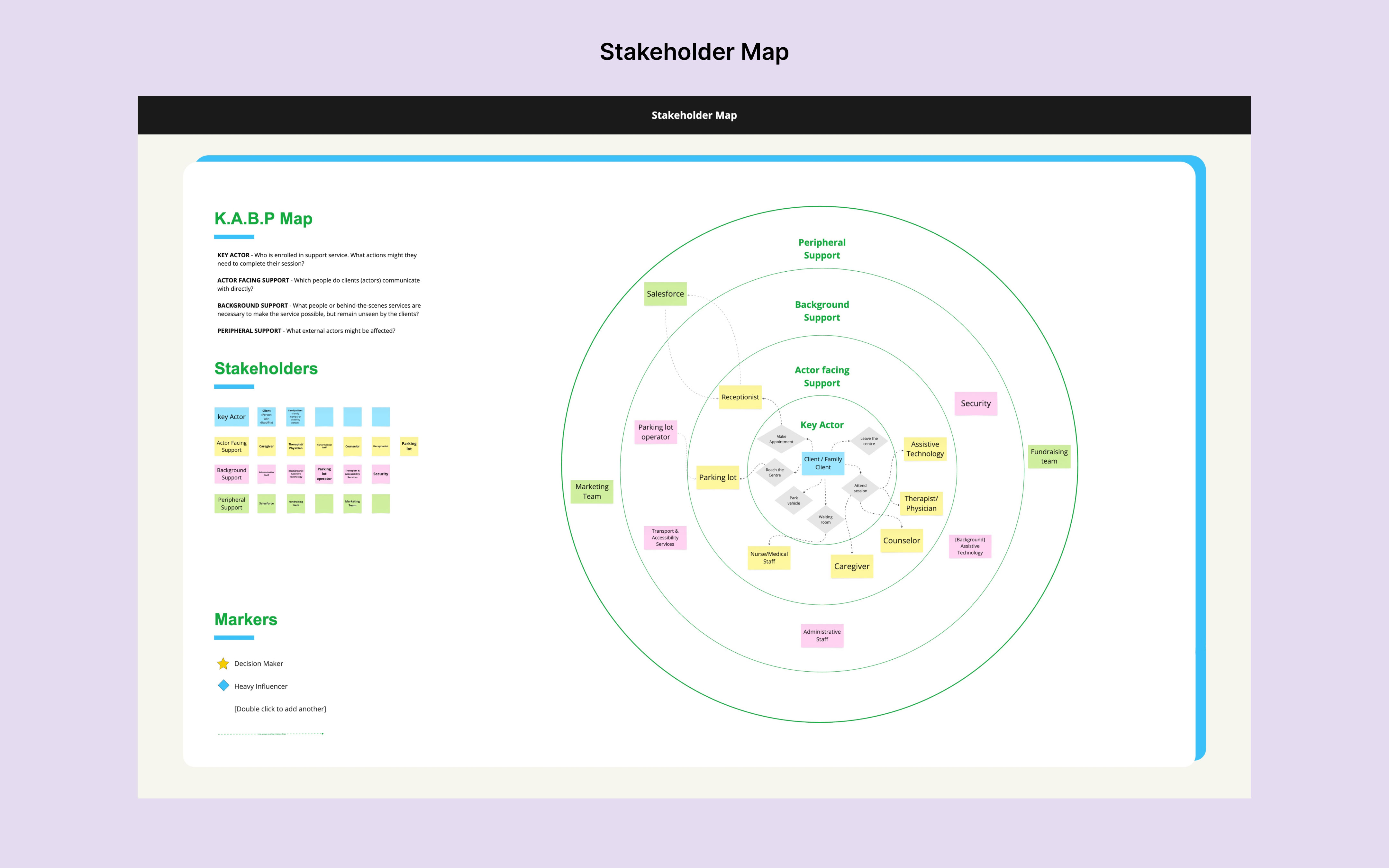
The service blueprint mapped the entire user journey, identifying pain points and opportunities for improvement. It outlined interactions between users and staff, focusing on streamlining scheduling, communication, and support services.

User Interviews
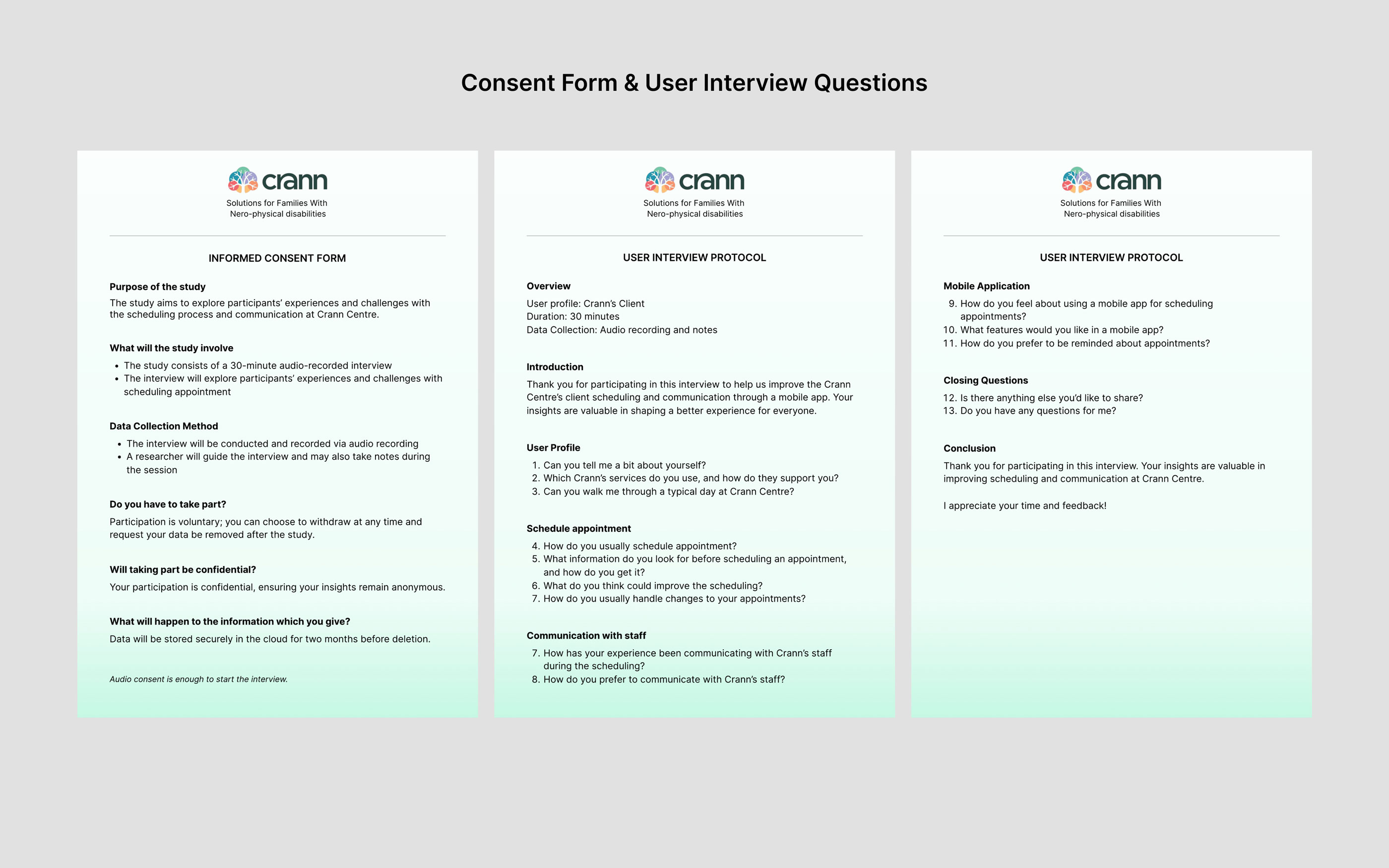
The interview was conducted to gather into user behaviour, needs, and their pain points.
Participant profile
- 4 participants (Included Crann Staff)
- Profile: Caregivers, People with Disabilities, Families
- Format: Semi-structured interview
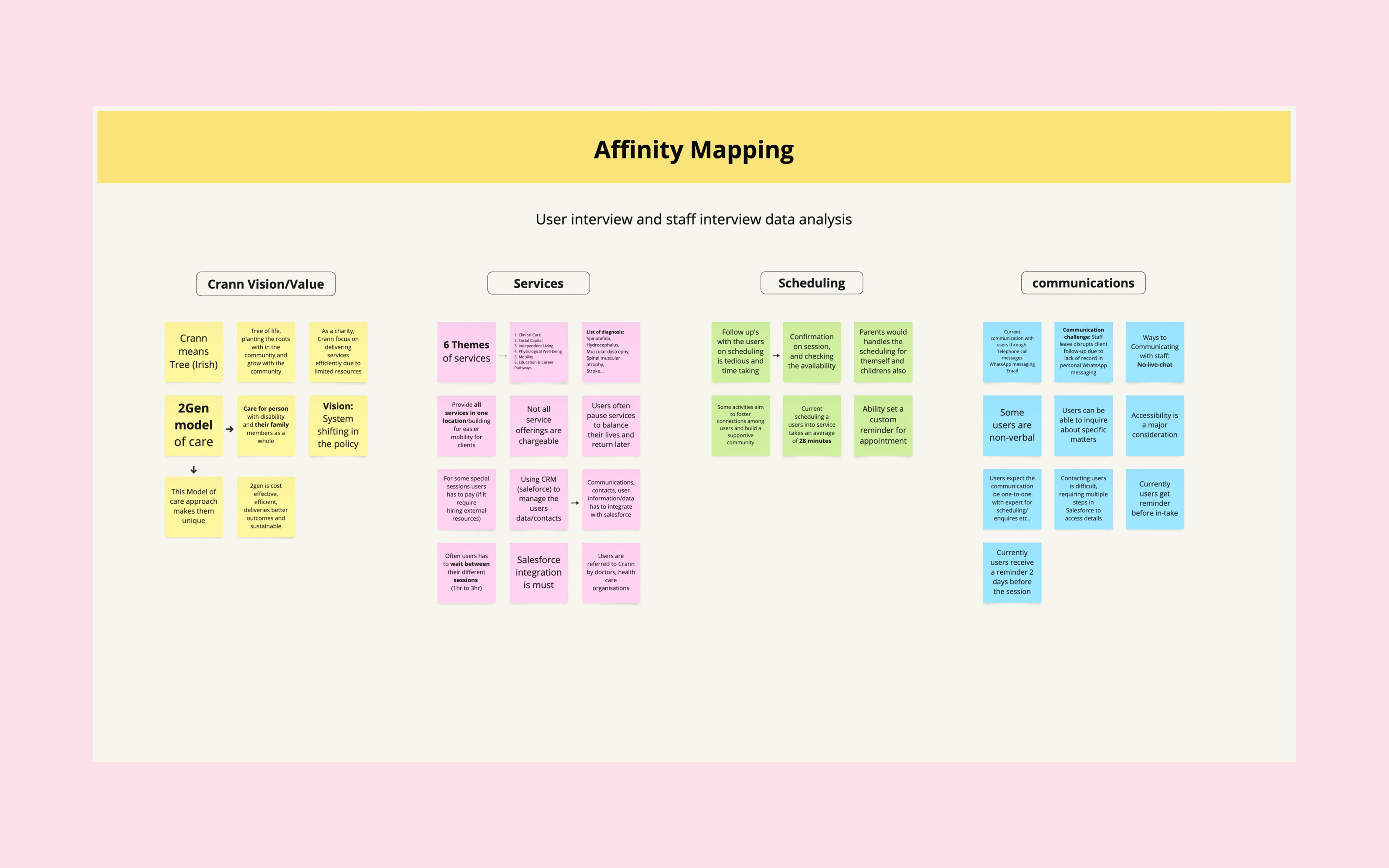
User Interview Findings
- Scheduling appointments is time-consuming, takes around 28 minutes per user
- Missed event and session updates due to ineffective notifications
- Difficulty accessing computers due to physical limitations
- Frustration when staff members are unavailable
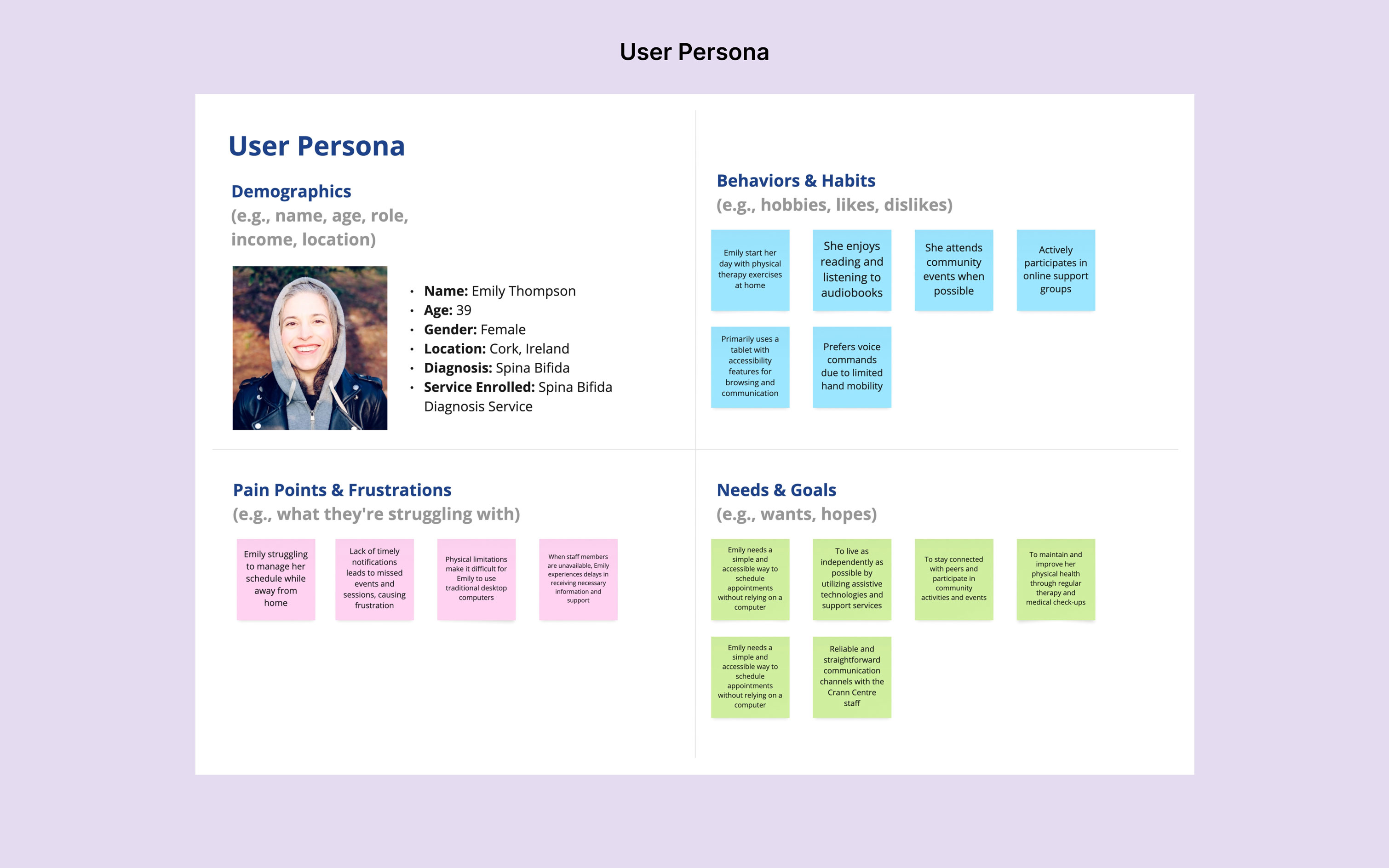
User Persona
Persona represent individuals with neuro-physical disabilities. Highlighting their frustrations, needs, and habits to shape a more accessible scheduling solution.
Define
Define Problem
Based on the findings, the brainstorming process led to the formulation of the following HMW question:
How might we help individuals with Neuro-physical disabilities to easily book appointments and communicate with staff so that they save time scheduling appointments and feel supported?
This question guided the design process, focusing on accessibility and reducing the burden on both users and staff.

Ideate
Ideation Process
To generate potential solutions, two ideation methods were applied:
- Six Thinking Hats: Used to assess the feasibility, risks, and potential impact of ideas.
- How/Wow/Now Matrix: Categorized ideas based on ease of implementation and impact.
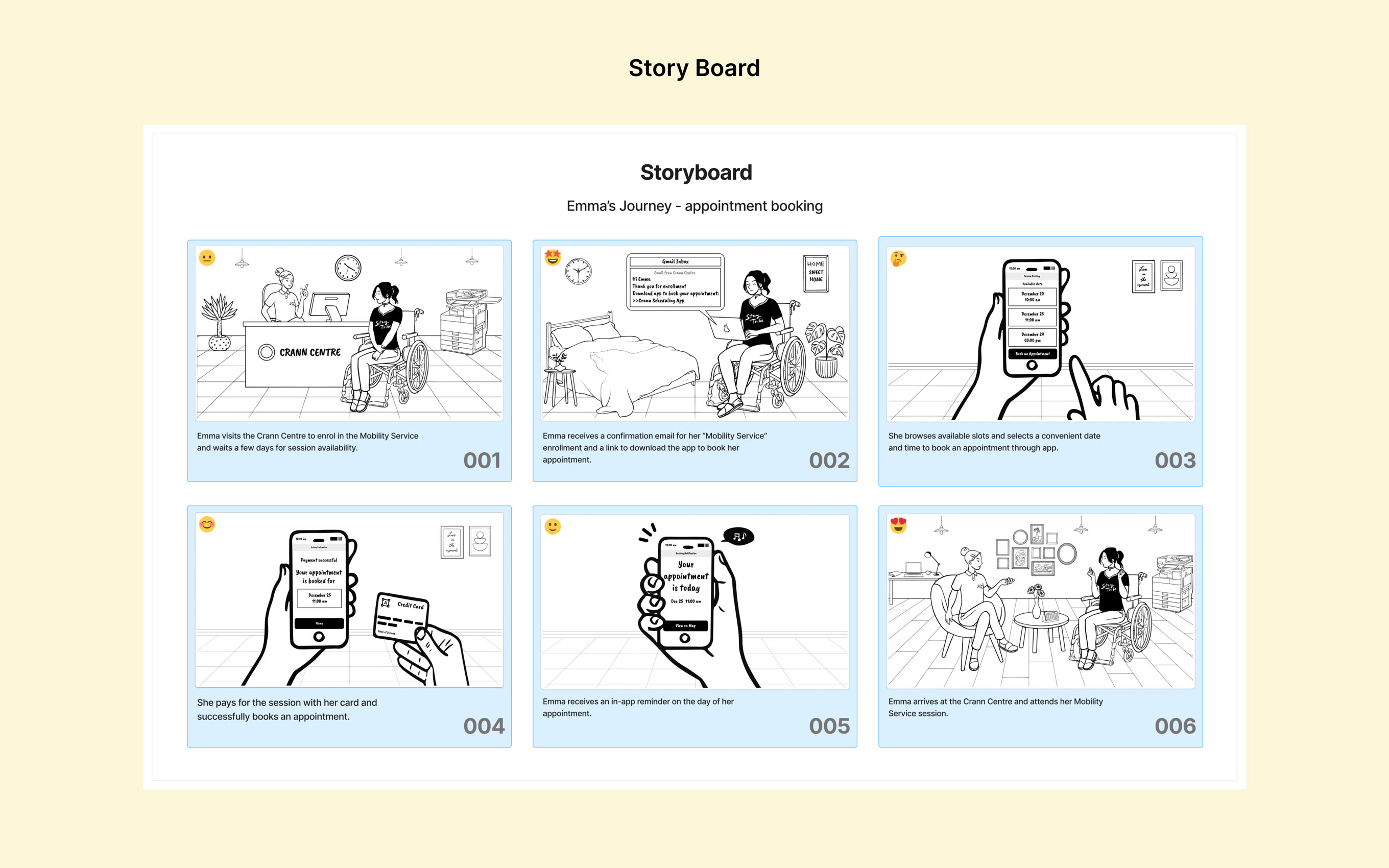
Storyboard
Emma enrolls in the Mobility Service at Crann Centre, books a session through the app, and attends her appointment. The storyboard maps her key actions and emotions throughout the journey.
User Flow
The session booking flow differentiates between paid and unpaid services, ensuring a seamless experience. Paid sessions guide users through the payment process, while unpaid services bypass it, simplifying the journey for better accessibility and efficiency.


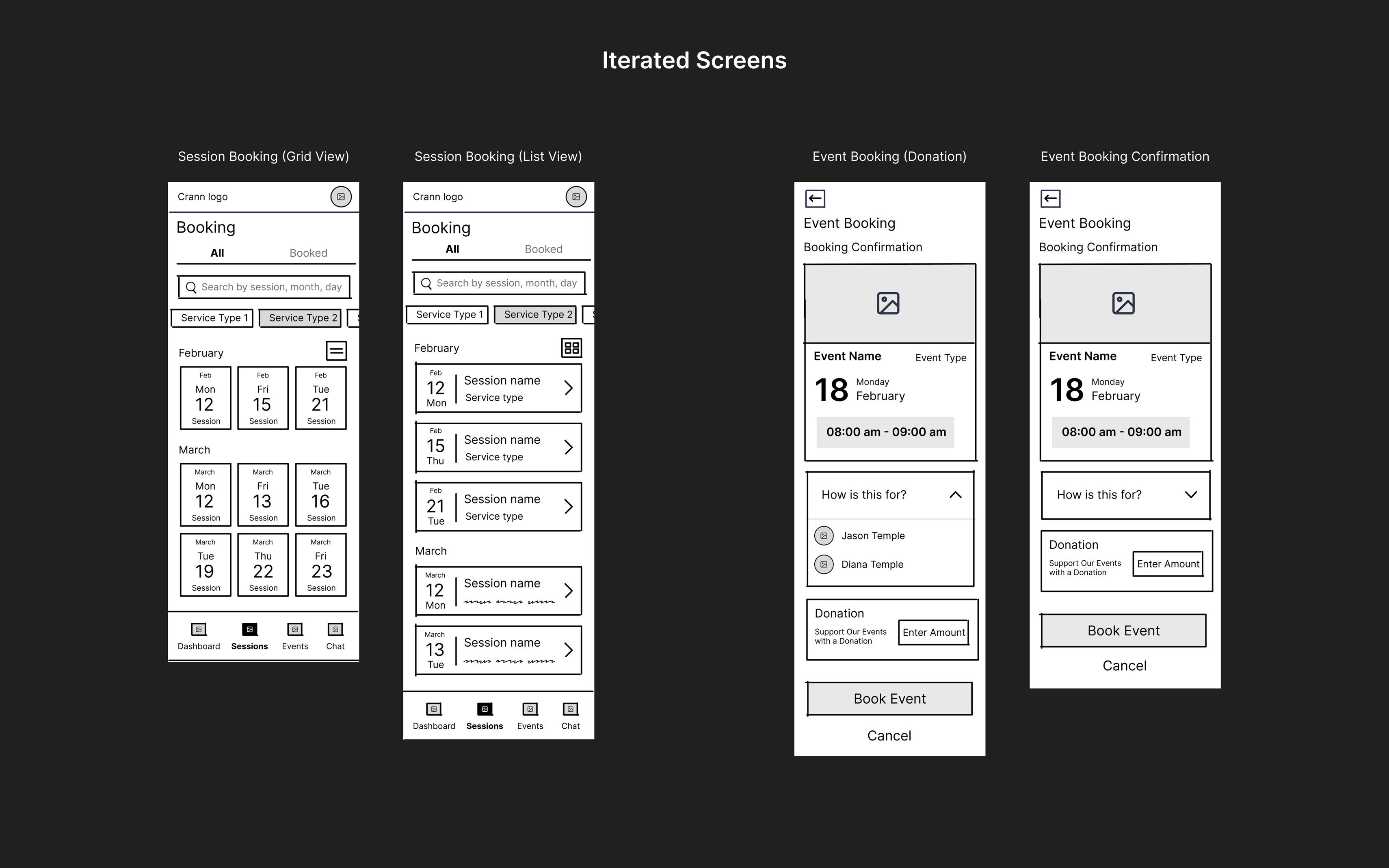
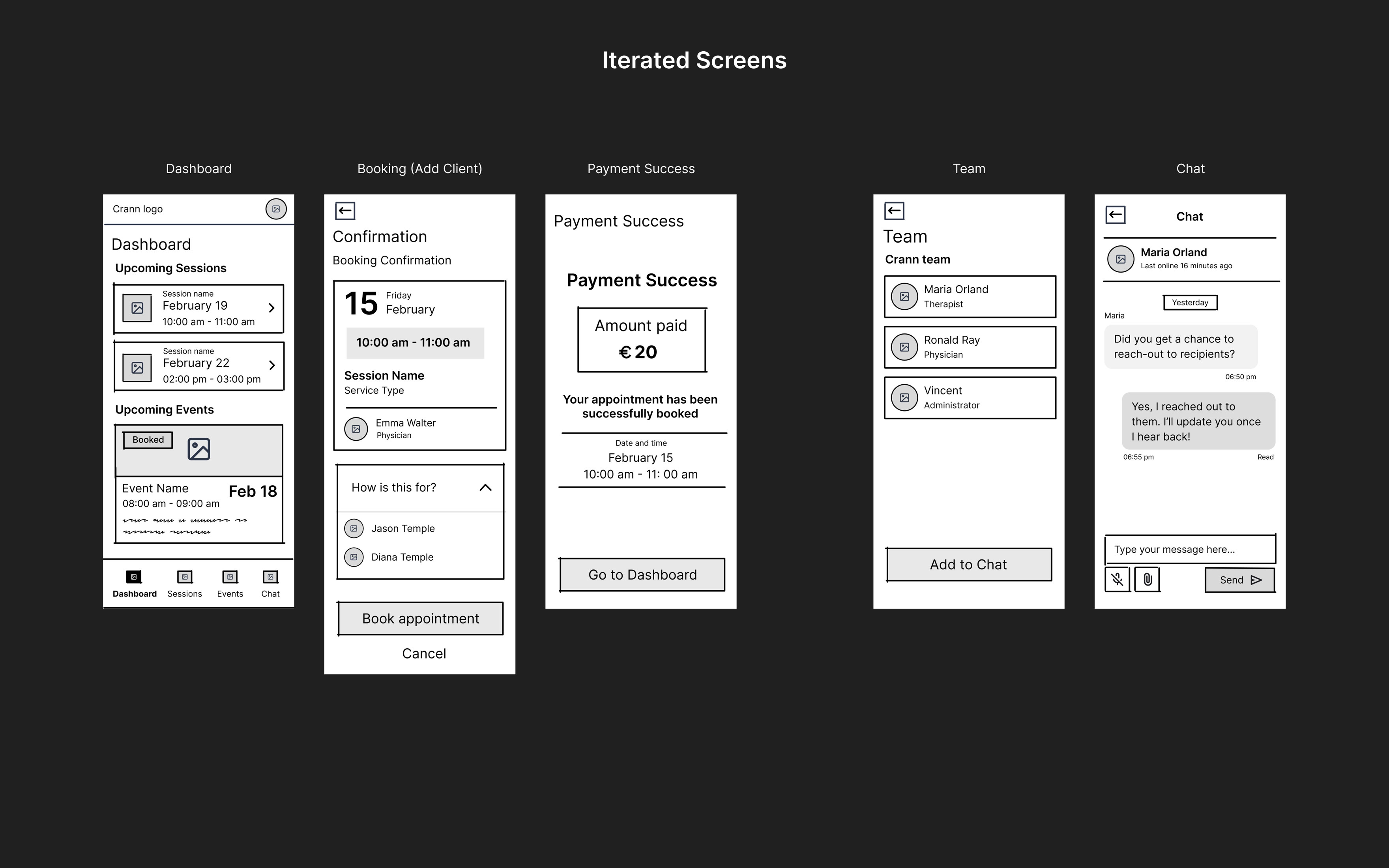
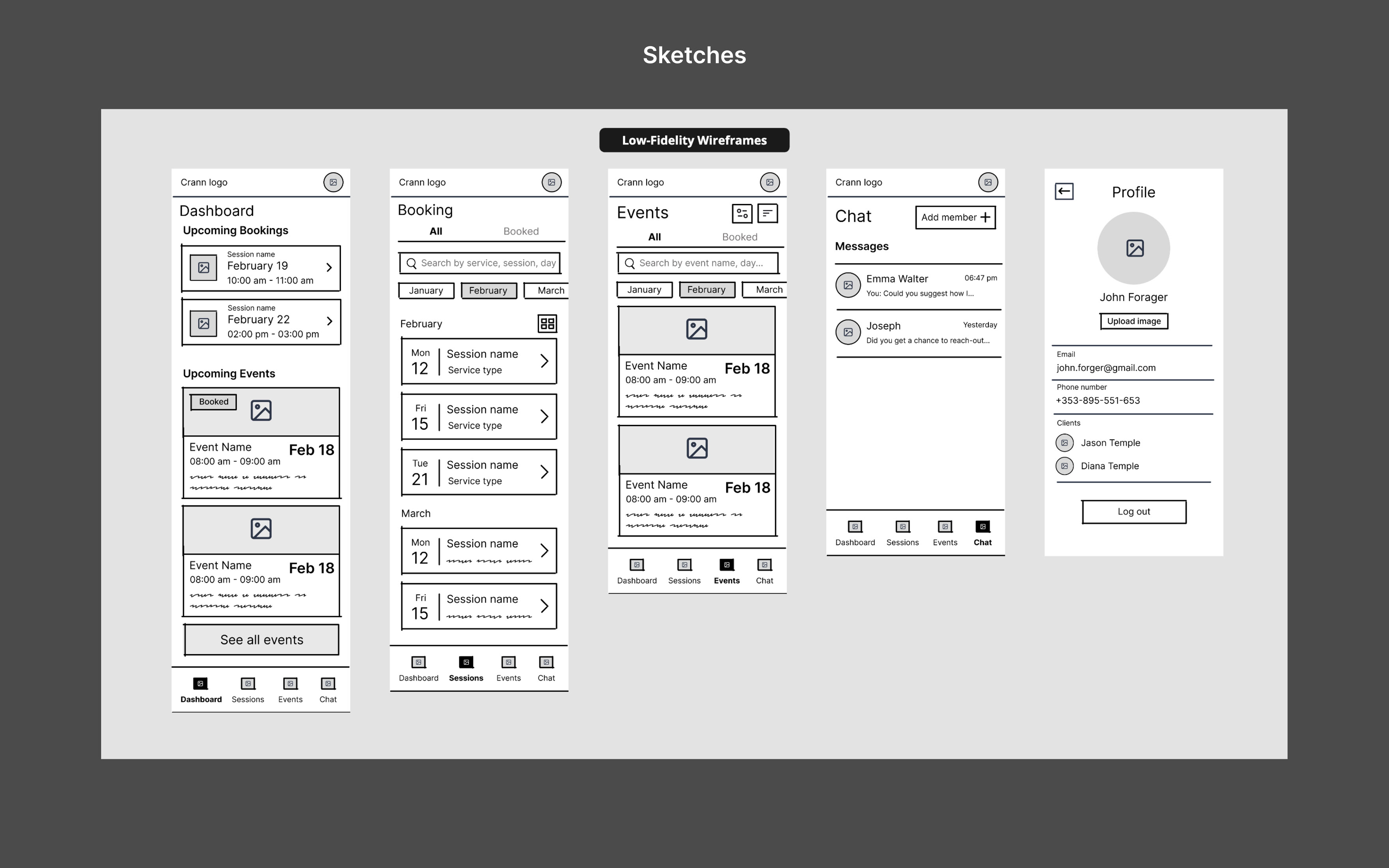
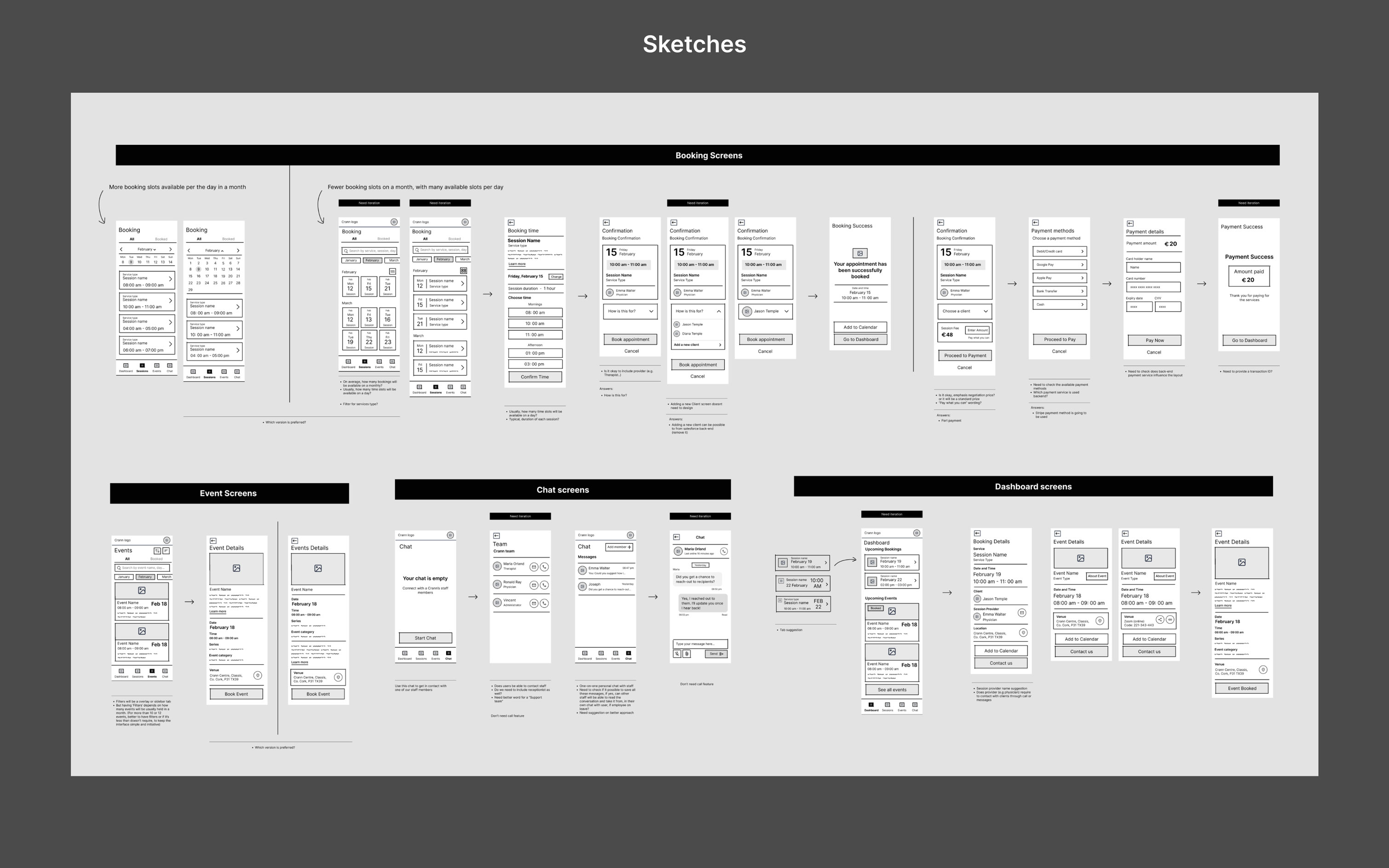
Low-Fidelity Wireframes
Low-fidelity sketches were created for key screens to focuses on simplifying the user flow to reduce cognitive load, making scheduling easier for individuals with neuro-physical disabilities. Tasks were broken down into clear, step-by-step actions to support their mental processing needs.
Prototype
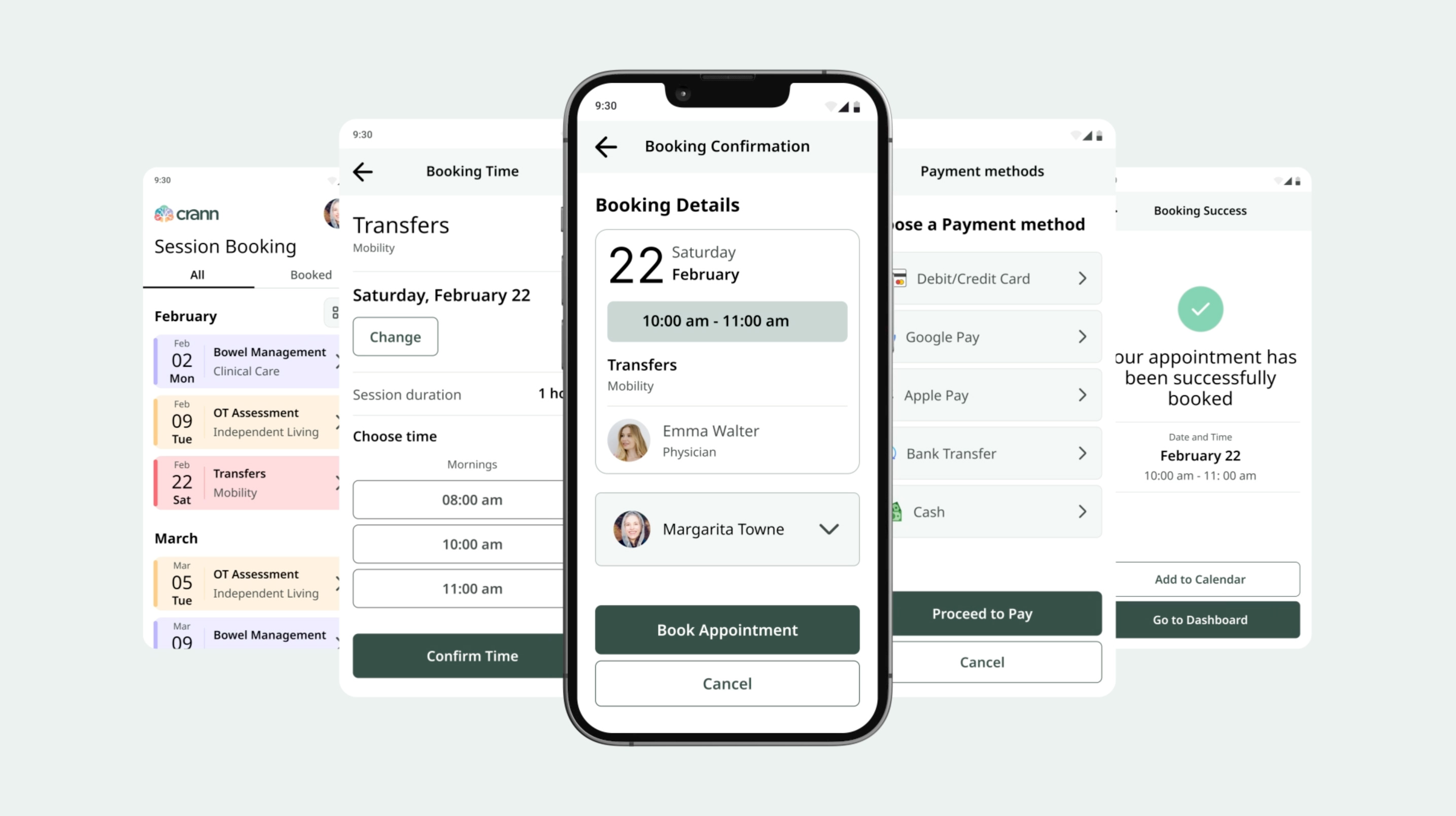
High-Fidelity Wireframes
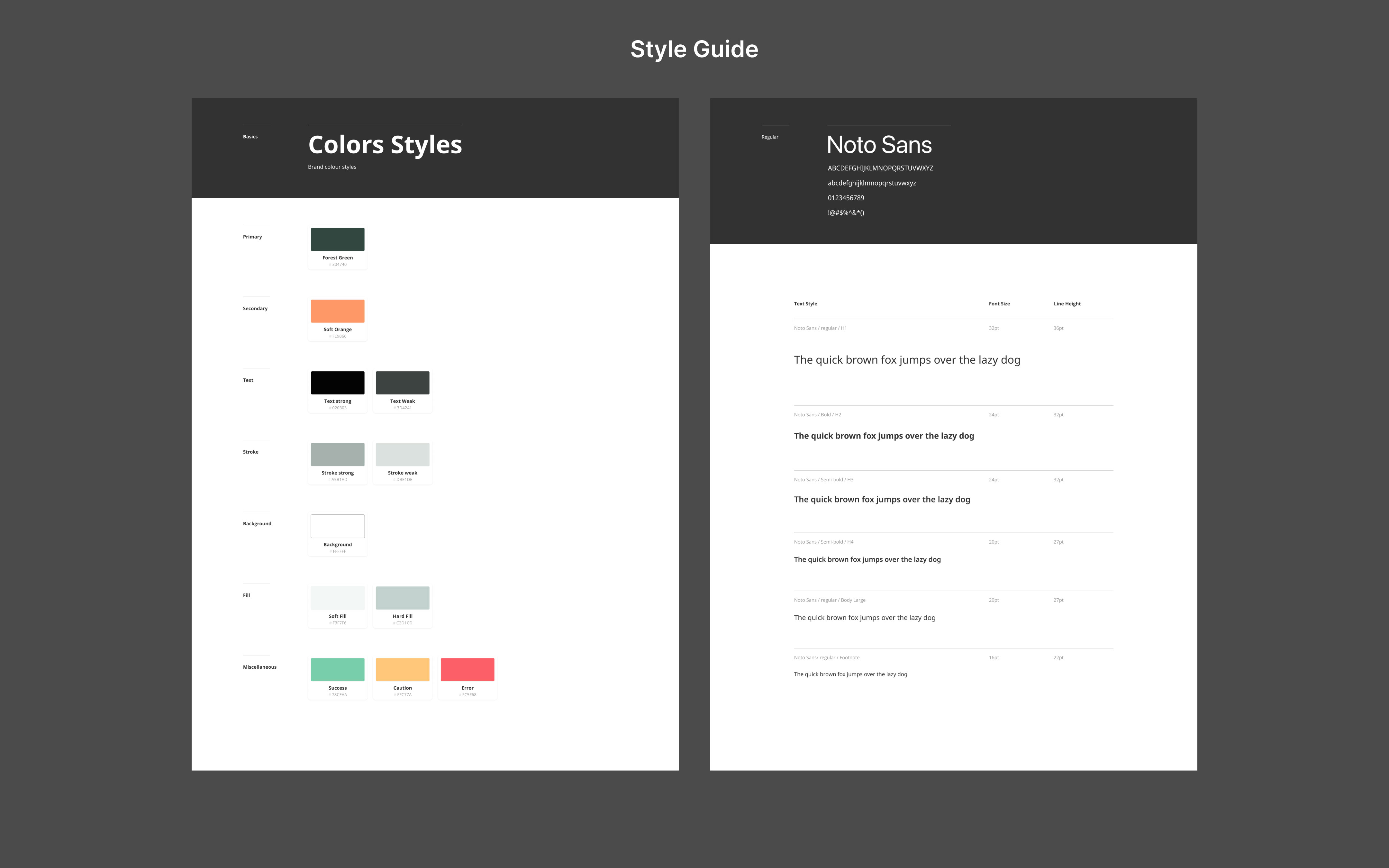
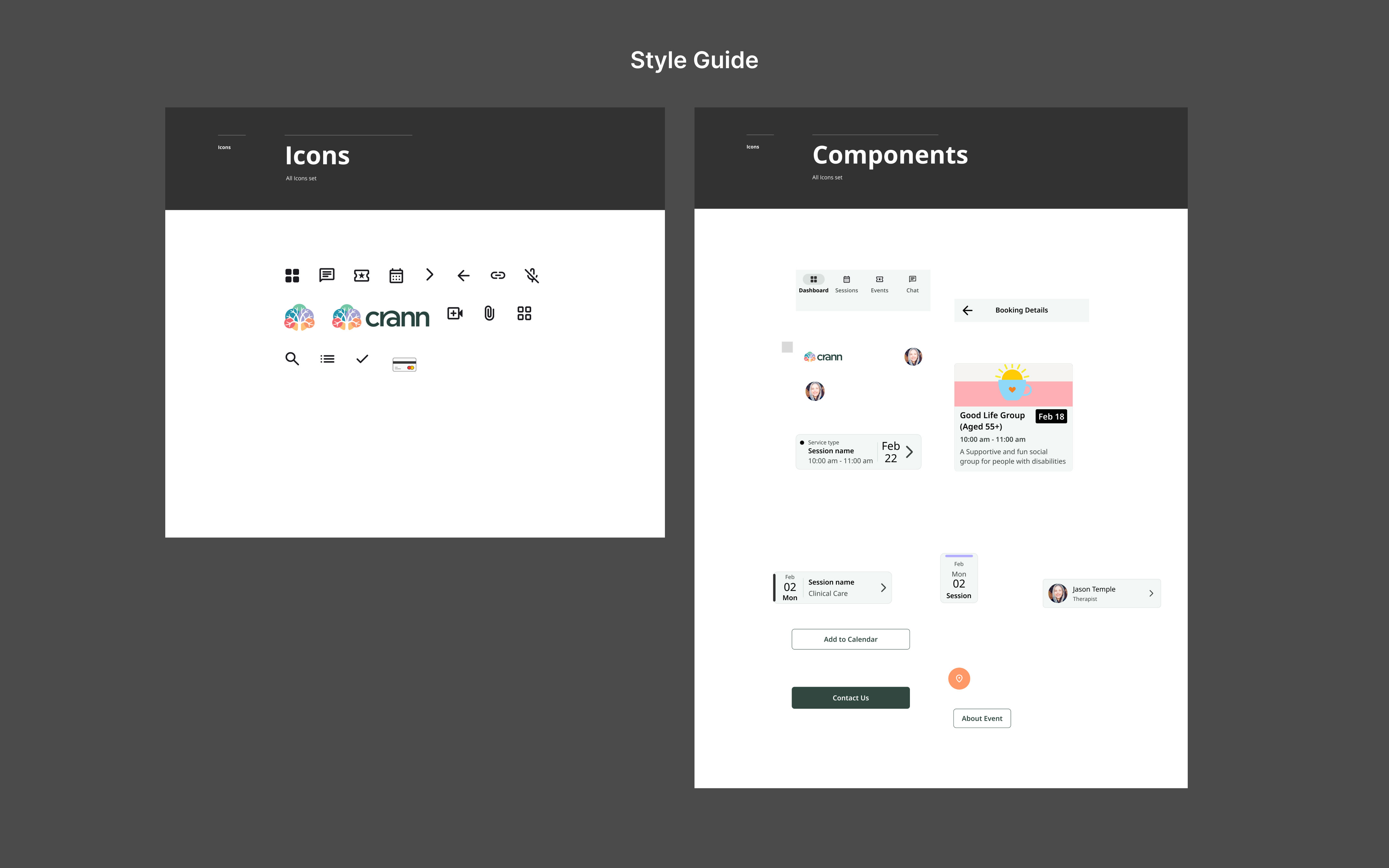
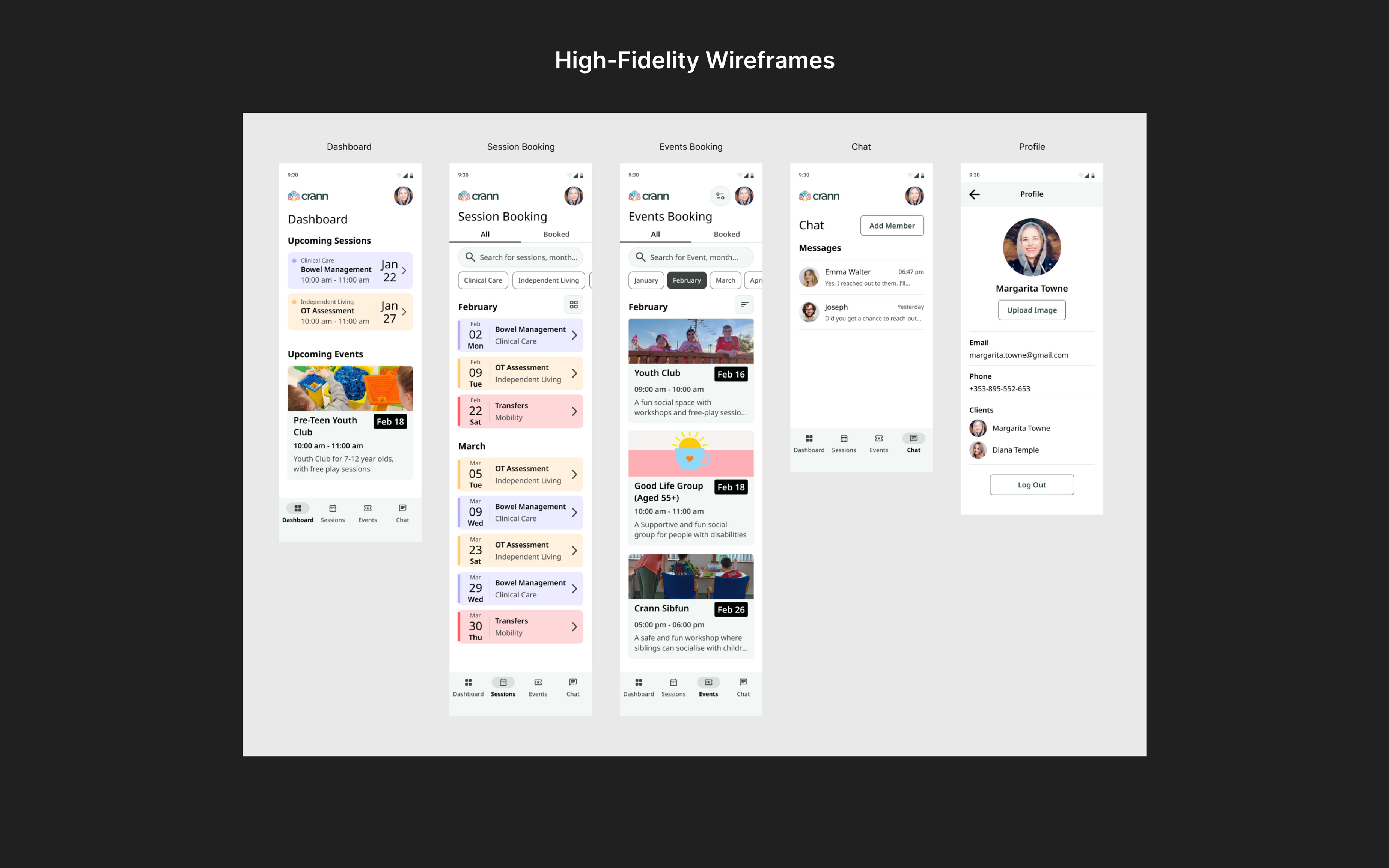
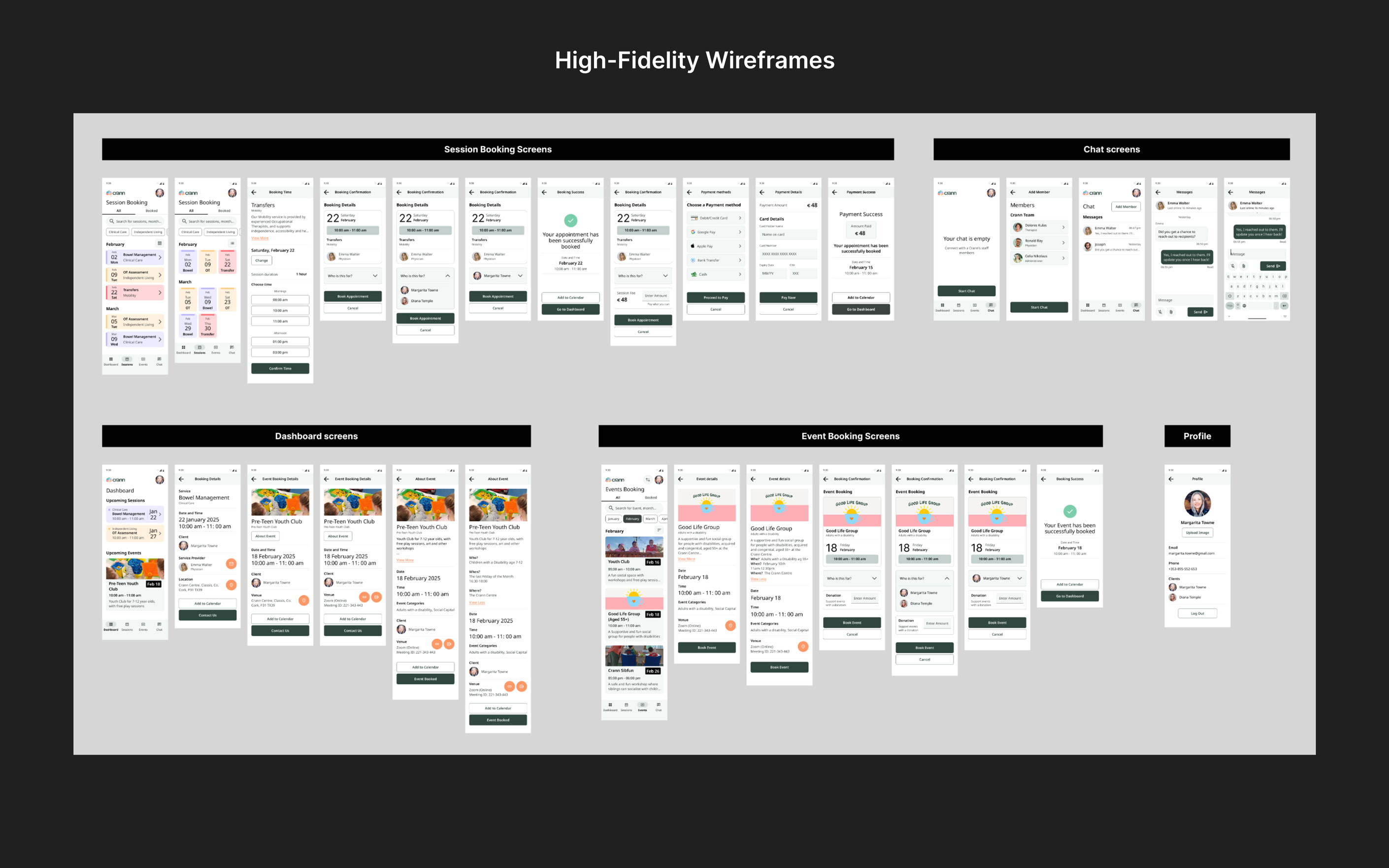
The high-fidelity designed were adhering to Crann’s brand guidelines to maintain a consistent look and feel. The design follows WCAG 2.0 accessibility standards, ensuring usability for individuals with neuro-physical disabilities. Key considerations included minimizing interaction costs, optimizing touch targets (48pt–56pt).
Test
Usability Testing
Usability testing was conducted through one-on-one sessions with key stakeholders using low-fidelity sketches to identify usability challenges.
Wins
- App design aligns with Crann’s brand, ensuring a cohesive experience.
- Scheduling time reduced to under 3 minutes.
- In-app notifications effectively reduce missed appointments.
- Users find in-app chat a convenient way to connect with staff.
Opportunites
- The booking calendar lacks an overview of available slots, requiring users to check each date individually.
- Adding new clients is only possible via the Salesforce backend, requiring administrative assistance.
- No built-in donation feature to support event funding and community engagement.
The Outcome
The project delivered an accessible, user-friendly booking system that streamlines scheduling and communication for individuals with neuro-physical disabilities.
- Reduced appointment booking time from 28 minutes to 3 minutes
- Improved engagement between support staff and users
- Seamlessly integrated the app into Crann’s service for efficient delivery
The solution supports vulnerable users while reducing Crann’s team workload.